PRESS RELEASE
AiForAfrica International Launches a $60 Million AI Development Master Plan for Africa
New York, USA — November 2, 2025 — AiForAfrica International, a New York, U.S.–based 501(c)(3) nonprofit organization, has officially unveiled a five-year, $60 million Artificial Intelligence (AI) Development Master Plan designed to accelerate technological transformation and digital inclusion across the African continent.
The historic announcement took place in New York, marking a global call to action for governments, corporations, foundations, and philanthropists to partner with AiForAfrica in building a future where AI becomes a force for equality, prosperity, and peace.
A New Era for Africa’s Digital Future
The master plan—developed by Executive Chairman Moses Goldman Asare, Chief Executive Officer Zakithi Motsa, and Director of Operations Emmanuel Kyle Otchere—outlines a continent-wide roadmap to train 10 million Africans, establish 200 AI community hubs, and build Africa’s largest AI career-pathway program by 2030.
Over the next five years, AiForAfrica will deploy education campaigns, innovation hubs, and global partnership tours to ensure that every African—regardless of background or geography—can access the knowledge, tools, and opportunities of the AI age.
“This $60 million master plan is the seed that will bring AI to the heart of Africa,” said Moses Goldman Asare, the New York-based, Ghanaian-born American Executive Chairman of AiForAfrica, International. “It will not only transform lives across the African continent but also strengthen global democracy, peace, and shared progress for generations to come. This is a great opportunity for strategic partners and friends of Africa to make a significant impact on the development of AI in Africa. This is a great day for all Africans and the entire world.”
AI as the Engine of Economic Development
Zakithi Motsa, South Africa-based CEO of AiForAfrica, emphasized the organization’s vision of using AI as the cornerstone of inclusive growth:
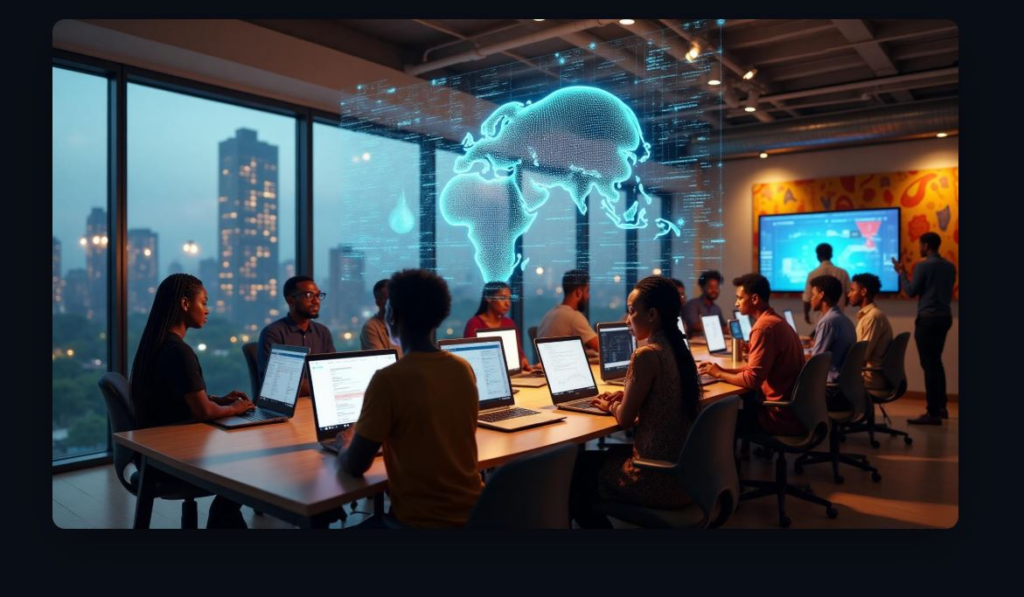
“Our critical focus is to make AI-powered technology and education the key strategy that will oil the engine of economic development and business growth across Africa. When responsibly developed, AI will help farmers increase yields, improve healthcare access, modernize education, and create millions of new jobs for young Africans.”
Director of Operations Emmanuel Kyle Otchere added that the initiative will “position Africa not as a consumer of global technology, but as a creator and contributor to the future of ethical AI.”
About the $60 Million Master Plan (2026 – 2030)
The AiForAfrica 5-Year Master Plan provides a clear framework for education, infrastructure, and partnership investment across the continent. Key goals include:
-
Training 10 million Africans in AI literacy, development, and application.
-
Establishing 200 AI Community & Innovation Hubs across 54 African nations.
-
Launching a Global AI Broadcasting Channel to showcase African innovation and ethics in AI.
-
Building Africa’s largest AI Career Pathway Program, connecting youth to remote work, startups, and research.
-
Forging partnerships in 20+ countries with corporations, governments, and universities.
AiForAfrica will focus on five strategic pillars: Education for All, Innovation & Infrastructure, Media & Advocacy, Global Partnerships & Diplomacy, and Transparency & Sustainability—all guided by strong ethics and independent annual audits.
A Global Call for Strategic Partners
AiForAfrica, International invites governments, corporate foundations, technology firms, and philanthropic families to partner in funding this transformative movement.
Every contribution directly supports education, innovation, and inclusion for millions of Africans—advancing global stability and sustainable development.
“Empowering Africa with AI is not charity,” said Asare. “It is a global investment in peace, democracy, and shared prosperity.”
Strategic partners will be recognized as “AIChampions for Africa,” with co-branding, visibility in global media campaigns, and impact reporting across all funded projects.
Transparency and Trust
As a U.S. 501(c)(3) tax-exempt organization, AiForAfrica ensures full accountability and transparency through:
-
Independent annual audits by certified public accounting firms.
-
Quarterly donor impact reports.
-
A public Donor Transparency Portal where every dollar’s impact can be traced in real time.
AiForAfrica is committed to ESG-aligned governance, ethical AI standards, and inclusive community leadership across all 54 African countries.
A Continental Movement with Global Impact
Africa is home to the world’s youngest population. By empowering this generation with AI skills, AiForAfrica will reduce unemployment, drive entrepreneurship, and enable African nations to contribute meaningfully to the global innovation economy.
“When Africa understands AI, Africa wins,” said Motsa. “And when Africa wins, the world wins.”
Call to Action
AiForAfrica International welcomes strategic donations, corporate sponsorships, and partnership grants to accelerate the implementation of its 2026–2030 Master Plan.
Corporations, governments, and philanthropists are invited to make contributions or establish long-term partnerships that will shape the future of ethical AI development and education in Africa.
To become a Founding Partner or AIChampion for Africa, please visit the official website of : AiForAfrica, International
The Global Leadership Team of AiForAfrica International
Moses Goldman Asare
Executive Chairman, AiForAfrica International
Moses Goldman Asare is a visionary leader, global strategist, and philanthropist with a distinguished career spanning more than 20 years across high-profile corporate and nonprofit organizations. As Executive Chairman of AiForAfrica International, he brings a rare blend of international governance experience, cross-cultural fluency, and purpose-driven leadership to guide the organization toward achieving its ambitious 5-year Master Plan (2026–2030): democratizing AI education for millions of Africans and transforming the continent’s economic future through ethical and inclusive innovation.
Over the past two decades, Moses has served on boards and executive leadership teams of prestigious companies and nonprofit institutions, shaping policies, driving organizational growth, and strengthening global partnerships. His governance background covers corporate leadership, nonprofit development, digital transformation initiatives, and international stakeholder engagement—anchored by a lifelong commitment to creating equity, economic empowerment, and generational impact.
Currently based in New York, USA, Moses has lived, worked, and led organizations across three continents—Africa, Europe, and North America—giving him a deep understanding of global systems, emerging technology landscapes, and the socio-economic realities of diverse communities. This unique international footprint enables him to navigate and unify cross-border alliances with clarity, empathy, and strategic precision.
His work is driven by a fundamental belief: impact is the ultimate legacy. Moses has dedicated his life to championing good causes, uplifting underserved communities, and advancing education-led economic mobility. Whether building programs that empower youth innovation, expanding knowledge access, or advocating for ethical AI adoption, his leadership is guided by service, integrity, and long-term societal transformation.
Beyond his professional achievements, Moses’s mission is personal. A devoted family man, he currently resides in New York with his wife and children—his greatest inspiration and daily reminder of the importance of building a future where opportunity is not limited by geography or background.
At AiForAfrica International, Moses is focused on scaling impact through:
-
Strategic global partnerships with governments, corporations, and international institutions
-
AI education deployment with ethical guardrails and real economic outcomes
-
Building AI hubs that amplify African innovation locally and globally
-
Cultivating a powerful movement of AI champions across the continent
-
Leading Africa into its era of knowledge-powered prosperity
Moses is a leader whose experience commands respect—and whose heart fuels trust. His leadership is not defined by titles alone, but by a proven life of service and an enduring vision of a stronger, smarter, and self-sustaining Africa.
With integrity, discipline, and a deep sense of purpose, Moses Goldman Asare continues to lead AiForAfrica International toward the realization of its global mission—delivering on the promise that when Africa understands AI, Africa wins.
——————————————————————————————————————————————————————————-
Zakithi Motsa
Chief Executive Officer, AiForAfrica International
Zakithi Motsa is a transformational leader, grassroots innovator, and advocate for inclusive AI education across Southern Africa. As Chief Executive Officer of AiForAfrica International, she channels more than eight years of experience at the intersection of corporate excellence, nonprofit impact, and community empowerment to accelerate the organization’s 5-year master plan—scaling ethical AI knowledge to millions across Africa.
Based in the Kingdom of Eswatini and South Africa, with strategic operations in Southern Africa, Zakithi has served in leadership roles across prestigious companies and high-impact nonprofit organizations throughout the Southern Africa region. Her career reflects a sustained commitment to technology-led education, stakeholder alignment, and societal progress—guided by integrity, compassion, and long-term public good.
Long before AI became a global imperative, Zakithi recognized its potential to redefine futures. She became one of the earliest champions for grassroots AI literacy in Southern Africa, designing and delivering community-level education initiatives that bring clarity to complex emerging technologies. Her work has empowered community leaders, catalyzed conversations in boardrooms and government offices, and broadened access to digital opportunity for underserved groups.
Every day, Zakithi bridges continents, generations, and socio-economic divides by helping diverse stakeholders understand the evolving AI landscape—including women, children, elders, corporate executives, government officials, grassroots organizers, and national decision-makers. Her leadership is defined by presence: meeting people where they are, speaking a shared language of empowerment, and transforming understanding into opportunity.
She leads with a belief that technology must uplift everyone, not just the few. Her work with AiForAfrica focuses on:
-
Scaling community-driven AI literacy campaigns
-
Strengthening government and corporate partnerships across Southern Africa
-
Protecting ethical AI deployment with culturally informed frameworks
-
Ensuring that marginalized voices are part of Africa’s digital transformation
-
Empowering Africa with knowledge that drives economic mobility
Zakithi’s dedication to impact is more than professional—it is personal. She is driven by a conviction that education is dignity, and that AI understanding is the currency of future prosperity. Her life and mission reflect service and human connection, underpinned by years of work supporting communities and advocating for equitable progress.
In a landscape that evolves rapidly, Zakithi Motsa remains grounded in purpose: equipping Africans with the confidence to innovate, empowering families and futures, and leading Africa toward a more technologically independent and economically inclusive tomorrow.
Her leadership brings both strategic credibility and heartfelt trust. With her on the ground, the movement grows stronger, and the vision comes closer to reality—that when Africa understands AI, Africa wins.
————————————————————————————————————————————————————————————————————–
Emmanuel Kyle Otchere
Director of Operations, AiForAfrica International
Emmanuel Kyle Otchere is a seasoned operations leader, public-sector strategist, and advocate for pan-African development with more than 10 years of impact-driven leadership across politics, governance, and international stakeholder coordination.
Based in Ghana, Emmanuel has played a significant role in shaping public discourse and national development initiatives at the highest levels—serving as part of the presidential team in Ghana, where he worked as a Presidential Staffer within the former administration of Nana Akufo‑Addo. His time in public service reflects deep experience in national policy engagement, cross-government collaboration, and institutional program delivery.
Emmanuel’s leadership journey is defined by bold ambition rooted in service. He once stood as a parliamentary candidate for the Ghanaian national assembly, running for a seat in the Parliament of Ghana. During his campaign for a Member of Parliament in the Republic of Ghana, he championed issues of economic growth, youth inclusion, and community development—reinforcing his long-standing commitment to public good and citizen empowerment.
His career spans political strategy, executive administration, national stakeholder alignment, and operational execution in complex environments. Today, as Director of Operations for AiForAfrica International, Emmanuel brings that foundation into continental AI empowerment—translating vision into systems, people into teams, and strategies into scalable execution.
Emmanuel oversees global operations at AiForAfrica, including:
-
Program deployment and operational scale across West and Southern Africa
-
Cross-regional logistics coordination between Ghana, Southern Africa, and international partners
-
Strategic travel operations and stakeholder engagement across multiple continents
-
Operational governance, systems excellence, and leadership alignment
-
Implementing scalable frameworks that ensure AiForAfrica executes at world-class standards
Emmanuel’s work in AI literacy began long before his current role—driven by a passion for enabling communities, informed decision-makers, and regional leaders to thrive in the age of emerging technologies.
His leadership is built on a simple truth: progress begins with access. For more than a decade, Emmanuel has committed his life to advancing education, equity, and community-first development, serving as a trusted advisor and operator to political, corporate, and nonprofit leaders across Africa and the world.
Beyond his governance credentials, Emmanuel leads with humanity. His mission is fueled by purpose, strengthened by experience, and guided by an unwavering commitment to Africa’s long-term technological relevance, economic mobility, and global competitiveness.
With precision, discipline, and heart, Emmanuel Kyle Otchere continues to operationalize AiForAfrica International’s bold continental vision—moving the organization toward its 5-year master plan and reinforcing the promise that when Africa understands AI, Africa wins.
About AiForAfrica, International
AiForAfrica International is a New York, USA-based, nonprofit organization founded by Moses Goldman Asare, Zakithi Motsa, and Emmanuel Kyle Otchere to democratize access to Artificial Intelligence education, tools, and opportunities across Africa.
Operating under U.S. 501(c)(3) tax-exempt status, the organization partners globally with governments, corporations, and educational institutions to equip Africans with ethical, socially responsible, and transformative AI skills.
Press Contact:
AiForAfrica International’s global headquarters is in New York, USA, with offices in Eswatini, South Africa and Ghana.
AiForAfrica International | Media & Communications Office
Contact us on our official website: AiForAfrica, International
Why Africa Is the Next Engine of Global Economic Growth — And Why AI Skills Will Decide the Outcome
By Moses Goldman Asare, AiForAfrica International, and Star Capital, New York, USA
A demographic force the world cannot ignore
In the coming decades, the global economy will be reshaped by one powerful and undeniable force: Africa’s youth population.
Africa is already the youngest continent on Earth. According to demographic data from the World Bank and the United Nations, around 70% of Sub-Saharan Africa’s population is under the age of 30. With Africa’s population now approaching 1.5 billion people, this means roughly one billion young Africans are entering or will soon enter their most productive economic years.
No other region in the world has a demographic profile like this.
While populations across much of the developed world are aging and shrinking, Africa’s youth population continues to expand rapidly. This demographic reality has profound implications for global economic growth.
But demographics alone do not create prosperity.
What matters is how those young people are equipped — with education, technology, and employable skills.
If Africa’s youth gain the right skills, the continent could unleash one of the largest waves of economic growth in modern history.
If they do not, the opportunity could be lost.
The coming economic wave: Africa’s consumer boom
To understand why Africa could become the next engine of global economic growth, imagine what happens when one billion young people begin to enter the middle class.
They get jobs.
They earn income.
They start families.
They buy homes.
They purchase furniture, electronics, clothing, and appliances.
They buy airline tickets and travel.
They start businesses.
They consume digital services.
They become participants in the global economy.
The result is a massive expansion of consumer demand.
Economists often refer to this phenomenon as the “demographic dividend.”
When a large young population enters the workforce, the number of productive workers grows faster than the number of dependents. This creates the conditions for rapid economic growth, rising incomes, and expanding markets.
Africa is on the cusp of exactly such a moment.
Why the world needs Africa’s growth
At the same time Africa’s population is expanding, the demographics of many advanced economies are moving in the opposite direction.
Across North America, Europe, and parts of Asia, populations are aging rapidly.
Countries such as Japan, Germany, Italy, and South Korea face declining workforces and increasing social welfare costs.
Even large economies like China are beginning to experience demographic slowdowns after decades of growth.
These structural shifts mean that global economic expansion increasingly depends on emerging markets.
And among emerging regions, Africa stands out.
Africa has:
• The youngest population in the world
• The fastest-growing labor force
• Rapidly expanding urban centers
• A growing digital economy
• Massive infrastructure and development potential
By 2050, Africa’s population is projected to reach around 2.5 billion people.
This means one out of every four people on Earth will be African.
The implications for global trade are enormous.
As Africa grows, so will demand for:
• Technology
• Infrastructure
• Consumer goods
• Financial services
• Transportation
• Education
• Healthcare
• Digital services
• AI-powered solutions
A prosperous Africa does not only benefit Africa.
It benefits the entire global economy.
American companies gain new export markets.
European firms expand their customer base.
Asian manufacturers sell more goods.
Global innovation ecosystems grow stronger.
Africa’s economic rise could become a major driver of shared global prosperity.
The missing link: skills and productivity
However, there is a critical challenge that cannot be ignored.
Demographics alone do not produce economic growth.
A young population only becomes a demographic dividend if young people have the skills, tools, and opportunities to participate productively in the economy.
Without those capabilities, the demographic dividend can become a demographic burden.
Each year, millions of young Africans enter the labor market.
But many face barriers:
• Limited access to advanced education
• Skills mismatched with modern industry needs
• Lack of exposure to cutting-edge technologies
• Limited access to global digital opportunities
In the era of artificial intelligence and automation, these challenges are even more urgent.
Technology is rapidly transforming the global labor market.
Jobs are changing.
Industries are evolving.
New skills are required.
If Africa’s youth are excluded from this technological transformation, the consequences will extend far beyond the continent itself.
Because the future workforce of the world will increasingly come from Africa.
Artificial intelligence: the new literacy of the global economy
Artificial intelligence is rapidly becoming the foundational technology of the 21st-century economy.
AI is transforming industries including:
• Healthcare
• Finance
• Agriculture
• Manufacturing
• Education
• Logistics
• Energy
• Transportation
• Customer service
• Software development
The global AI economy is projected to contribute trillions of dollars to global GDP in the coming decades.
But access to AI education and training remains highly unequal.
In many parts of Africa, young people with extraordinary talent and ambition simply do not have access to the same technological resources available in Silicon Valley, London, Berlin, or Seoul.
This gap must be closed.
Because if Africa’s youth gain access to the tools of artificial intelligence, they will not merely participate in the digital economy.
They will help build it.
A new model for skills development in Africa
This is where AiForAfrica International is working to make a difference.
AiForAfrica International was created with a simple but powerful idea:
Africa’s future prosperity depends on equipping its young people with the technologies that will shape the global economy.
Artificial intelligence is one of those technologies.
And access to AI education should not be limited to a few major urban centers.
It should reach rural communities, underserved regions, and disadvantaged populations that are often left behind by traditional education systems.
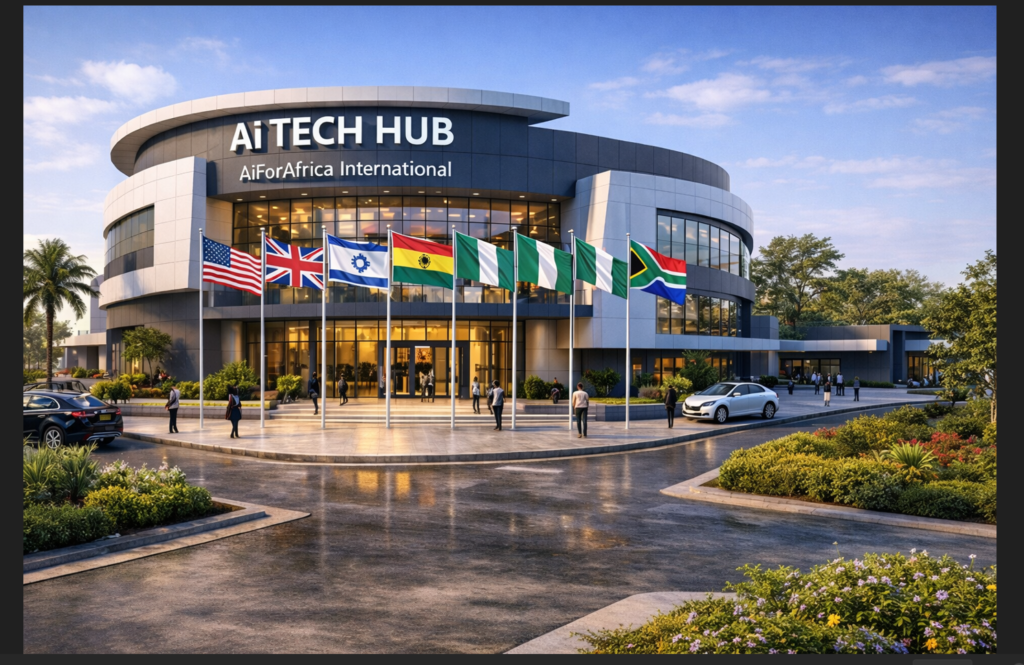
To help address this challenge, AiForAfrica International is building a network of AI Tech Hubs across Africa.
A bold vision: a $60 million AI Tech Hub network
The long-term vision is ambitious.
AiForAfrica International aims to build a $60 million network of AI Tech Hubs across Africa that will serve as centers for:
• AI education and training
• digital skills development
• innovation and entrepreneurship
• startup incubation
• workforce preparation
• technology access
These hubs will provide young Africans with access to:
• Artificial intelligence training
• machine learning tools
• software development skills
• digital entrepreneurship programs
• mentorship from global technology leaders
The goal is not only to teach technology.
The goal is to create pathways to employment, entrepreneurship, and innovation.
Starting where the need is greatest
One of the defining principles of AiForAfrica’s mission is to start where the need is greatest.
Too often, technological investments concentrate only in large metropolitan cities.
But many of Africa’s most talented young people live in rural and disadvantaged communities where access to modern technology infrastructure is limited.
AiForAfrica’s approach seeks to bridge this divide by bringing AI education directly into underserved communities.
By doing so, the organization hopes to unlock talent that might otherwise remain undiscovered.
Early progress already underway
While the vision is large, important steps have already begun.
AiForAfrica International has already initiated several early initiatives, including:
Teaching artificial intelligence skills across Southern Africa
Programs have already begun introducing AI education to students and aspiring professionals across parts of Southern Africa.
These programs are designed to build foundational understanding of:
• artificial intelligence
• machine learning
• data literacy
• digital productivity tools
The objective is to create early exposure to AI technologies that will shape future careers.
Construction of the first AI Tech Hub
AiForAfrica International has also begun construction on its first AI Tech Hub in Eswatini.
This hub is designed to become a center for:
• technology training
• youth development
• digital innovation
• entrepreneurial experimentation
It will serve as a pilot model that can be replicated across other regions of Africa.
Why this mission matters globally
Some may see this work as a regional development initiative.
But the implications are much broader.
If Africa falls behind in the global technology transformation, the consequences will not be limited to Africa.
They will affect the entire global economy.
Technology is now the foundation of economic productivity.
If the world’s fastest-growing workforce lacks access to technological skills, global economic potential will be constrained.
But if Africa’s youth are empowered with the tools of AI, innovation could accelerate in ways that benefit everyone.
Imagine millions of young Africans contributing to:
• global AI research
• software development
• digital startups
• healthcare innovations
• climate technology solutions
• agricultural productivity tools
The impact could be transformative.
Why collaboration is essential
Building a continental network of AI Tech Hubs cannot be accomplished by one organization alone.
It requires collaboration across sectors and across borders.
Governments must support enabling policy environments.
Universities must contribute research and academic expertise.
Technology companies must share tools and knowledge.
Financial institutions must invest in infrastructure.
Development agencies must support inclusive education initiatives.
Entrepreneurs must build new companies that create jobs.
This kind of ecosystem collaboration is what transforms ideas into lasting impact.
A call for strategic partners
AiForAfrica International is actively seeking partners who believe in the transformative potential of Africa’s youth.
The organization is inviting collaboration with:
• Technology companies interested in expanding digital skills globally
• Investors and venture funds supporting innovation ecosystems
• Development institutions and multilateral banks advancing workforce development
• Governments committed to technology-driven economic growth
• Universities and research institutions advancing AI education
• Startup accelerators and innovation hubs building entrepreneurial ecosystems
• Philanthropic foundations and donors supporting inclusive technology access
Partnership opportunities include:
• supporting AI Tech Hub infrastructure
• sponsoring AI education programs
• providing technology tools and cloud resources
• funding scholarships for young learners
• mentoring entrepreneurs and innovators
• collaborating on research and development
Together, these partnerships can accelerate the development of a technology-enabled workforce across Africa.
The opportunity of a generation
The coming decades will determine whether Africa’s demographic expansion becomes a historic economic opportunity or a missed moment.
The world is watching.
Because the stakes are global.
A billion young Africans entering the workforce represents one of the largest economic opportunities of the 21st century.
But opportunity must be matched with preparation.
That preparation begins with education.
It continues with technology.
And it accelerates with collaboration.
Building the future together
AiForAfrica International believes that Africa’s youth should not merely consume technology developed elsewhere.
They should build it, shape it, and lead it.
The organization’s mission is to ensure that the next generation has access to:
• AI education
• digital tools
• mentorship
• innovation ecosystems
• global opportunities
Because when Africa’s young people succeed, the benefits will ripple across the global economy.
Join the mission
The work has begun.
But the scale of the opportunity requires bold collaboration.
AiForAfrica International welcomes partnerships with organizations that believe in:
• expanding access to AI education
• empowering the next generation of innovators
• unlocking Africa’s economic potential
• building a more inclusive global technology ecosystem
If you are a:
• technology company
• investor
• university
• development institution
• government agency
• philanthropic foundation
• startup ecosystem leader
there is an opportunity to work together.
The next engine of global economic growth may well be Africa.
The question is not whether this transformation will happen.
The question is who will help build it.
And the time to begin is now.
Contact AiForAfrica International
Website: www.aiforafricans.org
Email: [email protected]
Tel: 680 287 2758
Thank you
• New York, USA (Global Headquarters)
372 Medford Rd, Syracuse, NY 13208
 +1 (680) 287 2758
• Manzini, Eswatini
VOC Building Offices, Unit 15
+268 7972 6649
• Johannesburg, South Africa
Unit 37-2B, The Parks, 3D Riversands Boulevard
Knopjeslaagte, Fourways
+268 7972 6649
• Ghana Office
+233 26 318 5290
About Moses Goldman Asare
Moses Goldman Asare is the Chairman and CEO of AiForAfrica International Inc.
Moses Goldman Asare is a visionary leader, global strategist, and philanthropist with a distinguished career spanning more than 20 years across high-profile corporate and nonprofit organizations. As Executive Chairman of AiForAfrica International, he brings a rare blend of international governance experience, cross-cultural fluency, and purpose-driven leadership to guide the organization toward achieving its ambitious $60 million 5-year Master Plan (2026–2030): democratizing AI education for millions of Africans and transforming the continent’s economic future through ethical and inclusive innovation.
Moses Goldman Asare is also the Chairman & CEO of Star Capital, with global headquarters in New York, USA.
Star Capital is building a globally positioned investment institution designed to connect international capital with high-growth opportunities across Africa and emerging markets.
Headquartered in New York City and expanding across key financial and strategic regions, Star Capital combines institutional discipline, advanced risk management, and deep regional insight to deliver long-term value creation.
The Strategic Vision of Star Capital is to become the Goldman Sachs of Africa, with global headquarters in New York, key offices in London, China, India and with strong operations in growing African markets like South Africa, Nigeria, Ethiopia, Egypt, Ghana, Morocco, Kenya, Algeria, and Angola.